Ballistic Standard for Armor Testing in 2026

Ballistic standards define how armor is evaluated, tested, and certified for operational use. For defense and aerospace R&D leaders, test engineers, and program managers, these standards shape procurement decisions, test protocols, and material selection across every phase of development. Sydor Technologies delivers standards-aligned ballistic testing instrumentation that helps you generate repeatable, traceable data against the requirements covered in this guide

This guide breaks down the major ballistic standards in use today, explains what each test measures, and outlines how to interpret results for armor and impact protection evaluation. You will find coverage of U.S., European, NATO, and international frameworks, along with practical guidance on test methodology and result interpretation.

Key Takeaways: Ballistic Standards for Armor Testing in 2026
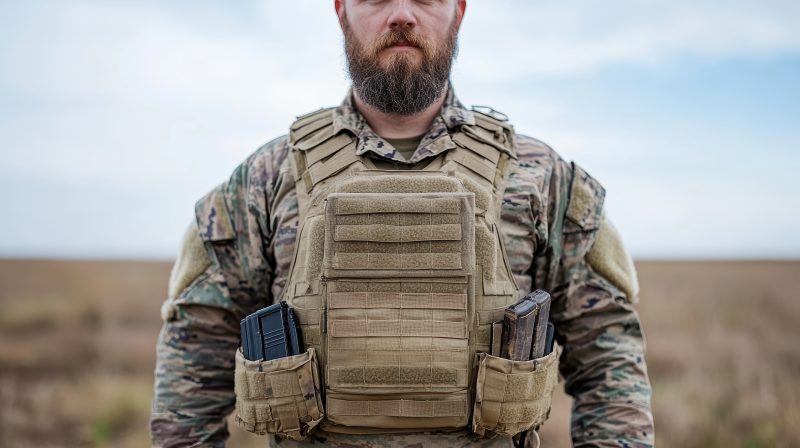
vecteezy a bearded man in a military uniform standing in a field 60207902


  • NIJ Standard 0101.07 replaces legacy protection levels with streamlined HG and RF threat classifications for body armor certification.
  • MIL-STD-662F defines V50 ballistic limit testing, the primary methodology for determining armor defeat thresholds in defense applications.
  • STANAG 2920 establishes a common NATO framework for comparing ballistic protection across member nations and coalition operations.
  • VPAM PM levels cover 14 distinct threat tiers, from handgun to heavy-caliber anti-materiel rounds used across European test programs.
  • Sydor Technologies offers integrated ballistic testing systems built to support NIJ, MIL-STD, STANAG, and VPAM test protocols.
 

What Are Ballistic Standards and Why Do They Matter?

Ballistic standards are formalized test protocols that define the ammunition types, velocities, shot counts, and pass/fail criteria used to evaluate armor materials. They exist so that protective equipment can be assessed against consistent, repeatable benchmarks rather than ad hoc testing conditions.

For defense R&D teams, these standards serve as the technical baseline for every armor evaluation. A helmet tested to STANAG 2920 must demonstrate a specific V50 value against a defined fragment-simulating projectile. A vest certified under NIJ 0101.07 must stop designated threats without exceeding a specified backface signature.

Without these frameworks, comparing test results across laboratories, manufacturers, and countries would be unreliable. Ballistic standards also underpin procurement specifications, contract requirements, and fielding decisions for military and law enforcement agencies.

How Is Ballistic Resistance Measured?

Ballistic resistance testing measures two primary outcomes: penetration resistance and backface deformation. Penetration resistance confirms whether a projectile passes completely through the armor sample. Backface deformation, often called backface signature (BFS), quantifies the depth of the indentation left in a clay backing material after a non-penetrating impact.

Test laboratories mount armor panels in front of calibrated Roma Plastilina clay at a controlled temperature. After each shot, technicians measure the clay indentation depth. NIJ standards set a maximum BFS of 44 mm, while European standards such as HOSDB and TR typically allow 20 to 25 mm.

Velocity measurement is equally critical. Chronographs or velocity screens positioned before and after the target record projectile speed, confirming that test rounds fall inside the specified velocity window. Shots outside this window are discarded and repeated.

NIJ Standard 0101.07: The U.S. Benchmark for Body Armor

NIJ Standard 0101.07, published by the National Institute of Justice, is the primary body armor performance standard in the United States. It replaces the previous 0101.06 classification system with a streamlined set of threat levels designated HG (handgun) and RF (rifle).
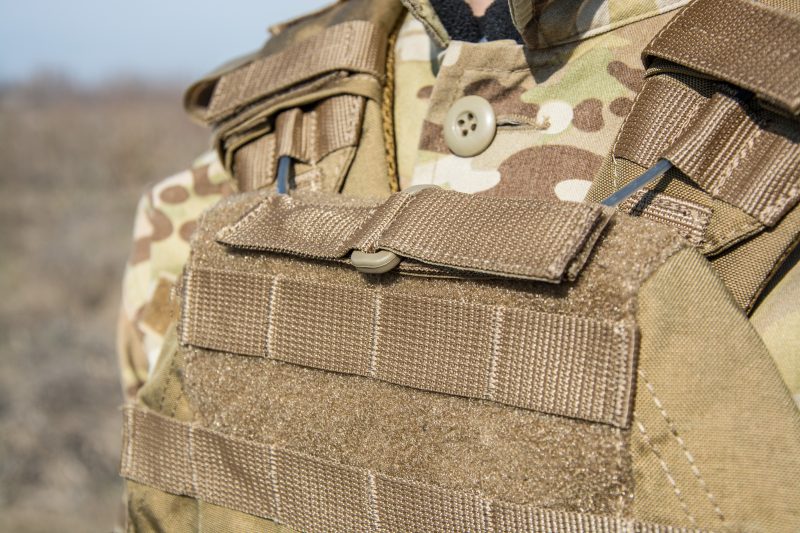
vecteezy close up of army uniform on the soldier 7566637

Handgun Protection Levels Under NIJ 0101.07

HG1 (formerly Type II) tests against 9 mm FMJ RN and .357 Magnum JSP rounds. HG2 (formerly Type IIIA) adds protection against .44 Magnum JHP and higher-velocity 9 mm threats. Each level specifies exact bullet mass, velocity tolerance, and maximum allowable BFS.

Rifle Protection Levels Under NIJ 0101.07

RF1 covers 7.62×51 mm M80 Ball NATO FMJ and 5.56 mm M193 BT rounds. RF2 adds the 5.56 mm M855 steel-tipped round to the RF1 threat set. RF3, the highest classification, tests against .30-06 M2 armor-piercing ammunition, replacing the former Type IV designation.

NIJ 0101.07 also introduces dedicated test protocols for female-pattern body armor, addressing fit and coverage requirements specific to female officers. Armor models certified under this standard undergo follow-up inspection and testing at NVLAP-accredited laboratories over a five-year period.

MIL-STD-662F: V50 Ballistic Limit Testing

MIL-STD-662F is the U.S. Department of Defense standard for determining the V50 ballistic limit of armor materials. V50 is the velocity at which a given projectile defeats a specific armor sample 50% of the time. It is the most widely referenced metric in military armor qualification.

The test involves firing multiple rounds at incrementally adjusted velocities to bracket the defeat threshold. A minimum of six fair shots, three complete penetrations and three partial penetrations, must fall in a velocity spread of no more than approximately 38 m/s (125 ft/s) to calculate a valid V50.

This standard applies to helmets, body armor plates, vehicle armor, and transparent armor. It tests materials including aramid composites, UHMWPE, ceramic strike faces, and steel plate.

Accurate velocity measurement is essential for valid V50 determination. Sydor Technologies’ Doppler radar systems track projectile speed up to over 1,000 m/s, supporting precise data capture for V50 protocols.

STANAG 2920: NATO’s Shared Protection Framework
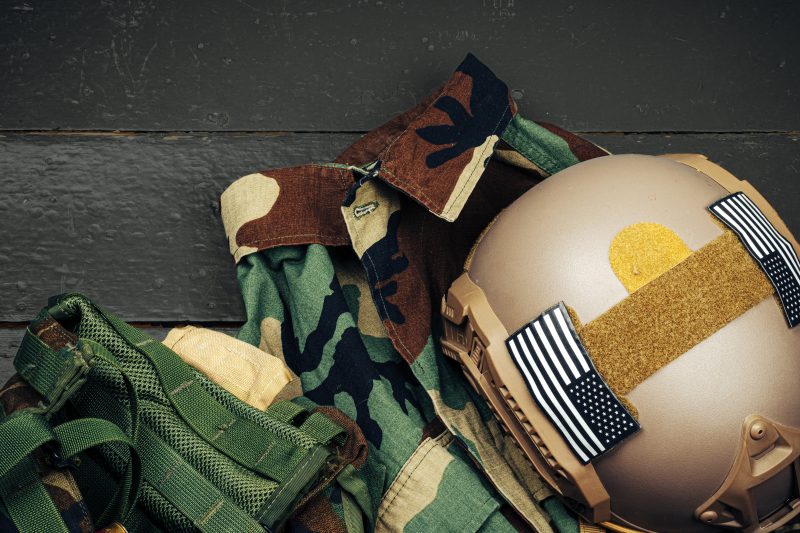
vecteezy us military helmet on wooden background close up 73289855

STANAG 2920 (NATO Standardization Agreement) establishes a common method for testing and classifying the ballistic protection of personal armor and combat helmets across NATO member nations. Like MIL-STD-662F, it relies on V50 ballistic limit testing, but specifies a standard 1.1 g fragment-simulating projectile (FSP) as the primary test threat.

The FSP is a chisel-nosed steel cylinder designed to simulate the fragments produced by exploding ordnance, the most statistically common wounding mechanism on the modern battlefield. Testing against this standardized projectile allows direct comparison of armor performance across different countries and manufacturers.

STANAG 2920 results are reported as a V50 value in m/s against the 1.1 g FSP. Higher V50 values indicate greater fragment protection. NATO members use these values in procurement specifications and interoperability agreements, so allied forces can field armor with comparable protective capabilities.

STANAG 4569: Vehicle Protection Levels
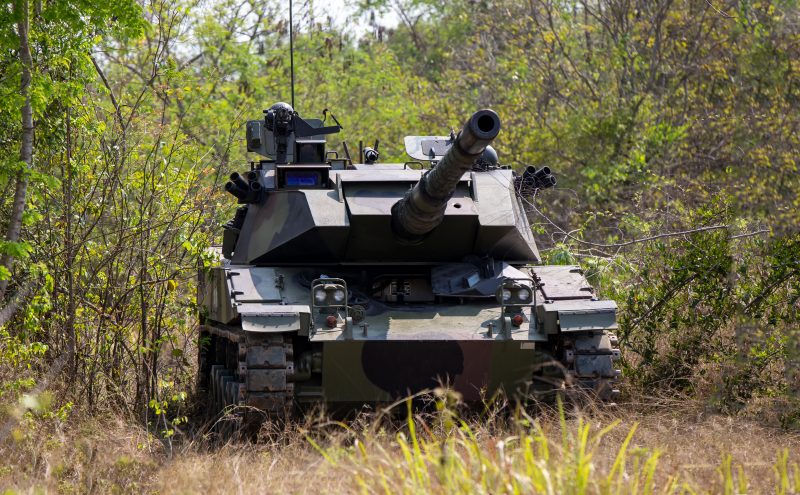
vecteezy ammo military tank in the forest 7110426

STANAG 4569 defines protection levels for military vehicles against ballistic threats and mine/IED blasts. It classifies vehicle armor into five distinct levels, each tested against specific kinetic energy (KE) projectiles and artillery fragments.

Level 1 protects against 7.62×51 mm NATO ball ammunition at 30 meters. Level 2 raises the threshold to 7.62×39 mm API rounds. Level 3 tests against 7.62×51 mm AP at close range. Level 4 addresses 14.5 mm AP at 200 meters, and Level 5 covers 25 mm APDS rounds.

Vehicle armor testing under STANAG 4569 requires controlled firing at defined angles of obliquity, making precision firing systems and repeatable target positioning critical. The standard also specifies mine blast levels from 1 through 4, measured against under-belly and side detonations.

VPAM Standards: European Ballistic Classification

The VPAM (Vereinigung der Prufstellen fur angriffshemmende Materialien und Konstruktionen) framework is widely used across Europe for certifying body armor, helmets, vehicle armor, and transparent glazing. The primary scale for body armor and hard armor plates is VPAM PM (Prufverfahren Materialien), which classifies protection into 14 levels from PM 1 through PM 14.

VPAM PM Protection Tiers

PM 1 through PM 4 cover handgun threats ranging from .22 LR through .44 Magnum. PM 5 addresses .357 Magnum FMJ at 580 m/s. PM 6 through PM 7 move into rifle territory, covering 7.62×39 mm and 5.56×45 mm SS109 rounds alongside 7.62×51 mm FMJ.

PM 8 through PM 12 address progressively harder armor-piercing and incendiary rifle threats. PM 13 covers 12.7×99 mm (.50 caliber) ammunition, and PM 14 tests against 14.5×114 mm API rounds, representing the upper boundary of personal and light vehicle protection.

Each VPAM level specifies exact ammunition type, bullet mass, and velocity tolerance. European test labs accredited under VPAM protocols issue certificates that are recognized across EU member states, simplifying cross-border procurement.

HOSDB/CAST: UK Police Body Armor Standard

vecteezy london united kingdom july 18th 2024 police officers 49798248

The Home Office Centre for Applied Science and Technology (CAST), formerly HOSDB, publishes the UK standard for police body armor. The current 2017 edition defines protection levels HO1 through HO4 for ballistic threats, plus SG1 for shotgun resistance and several special protection categories.

HO1 and HO2 test against 9 mm FMJ and 9 mm JHP at 365 m/s and 430 m/s respectively. HO3 addresses 7.62 mm NATO Ball at 830 m/s and 7.62×39 mm surrogate at 705 m/s. HO4 covers .308 Win expansion rounds at 820 m/s. Armor tested to HO4 must also satisfy all HO3 requirements.

A distinctive feature of the CAST standard is its mandatory waterproofing requirement: all stab and ballistic inserts must meet ISO 811:1981 water resistance criteria. The standard also requires in-life monitoring (ILM) and production quality testing (PQT), ensuring that fielded armor maintains its protective capability over time.

ASTM International Ballistic Standards

ASTM International publishes a set of test methods and specifications that support and supplement the NIJ certification framework. These standards define the procedures for clay block preparation, penetration resistance testing, ballistic limit data collection, and body armor conditioning.

Key ASTM Standards for Armor Testing

ASTM E3004-22 covers clay block preparation and verification. ASTM E3017-17a defines the method for assessing penetration resistance and BFS. ASTM E3110/E3110M-22 outlines ballistic limit data collection. ASTM E3368/E3368M-23 specifies requirements for ballistic-resistant helmets worn by public safety officers.

NIJ Standard 0101.07 references multiple ASTM methods, making them integral to the U.S. body armor certification process. Laboratories performing NIJ compliance testing must follow these ASTM procedures to maintain their NVLAP accreditation.

How to Interpret Ballistic Test Results

A ballistic test report typically includes the threat round, projectile velocity, shot placement, penetration result (complete or partial), and BFS measurement for non-penetrating shots. Reading these results requires understanding several key variables.

Velocity Windows and Fair Shots

Each standard defines an acceptable velocity range for test rounds. A shot that falls outside this window is not counted. This is why precise measurement systems are critical. Velocity readings must be captured at the correct distance from the muzzle, using calibrated chronographs or optical velocity screens.

Backface Signature Thresholds

BFS limits vary across standards. NIJ allows 44 mm maximum mean BFS. HOSDB/CAST specifies 25 mm for rifle threats with a 30 mm single-shot limit. VPAM and TR apply similar European BFS thresholds. When comparing armor performance across different standards, you must account for these differences in allowable deformation.

V50 Calculations

V50 results require careful interpretation. A higher V50 against a given projectile indicates greater defeat resistance, but the value is statistical.

The velocity spread, number of fair shots, and test conditions all influence the reported figure. Always verify that the testing laboratory followed the shot-count and velocity-spread requirements specified in MIL-STD-662F or STANAG 2920.

The Role of Yaw Measurement in Ballistic Testing
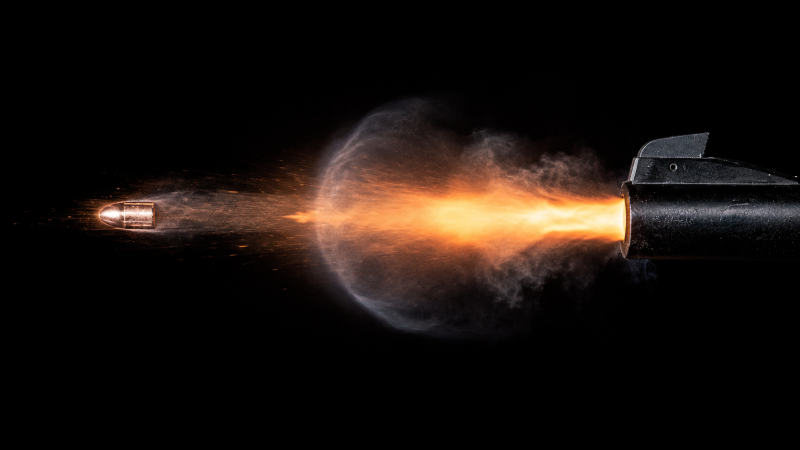
Bullet Trail and Muzzle Flash

Most ballistic standards require that test shots arrive at specified yaw angles, typically near zero, to maintain result consistency. Measuring yaw before impact confirms that each shot meets this requirement. The Biokinetics Ballistic Yaw Sensor, available through Sydor Technologies, captures projectile yaw angles with traceable accuracy, replacing legacy yaw card methods that are slower and less precise.

By accounting for yaw angle before impact, you can increase testing consistency, improve analysis capabilities, and maintain throughput across high-volume test programs.

How Environmental Conditioning Affects Armor Performance

Several standards require armor samples to undergo environmental conditioning before ballistic testing. The goal is to evaluate armor performance under conditions that simulate real-world wear and exposure.

NIJ 0101.07 includes temperature, moisture, and mechanical wear conditioning. Armor panels are subjected to controlled humidity and heat cycling before test shots. The CAST 2017 standard adds a mandatory waterproofing requirement and periodic in-life monitoring. TR standards apply temperature cycling specific to European climate conditions.

Sydor Technologies’ conditioning chambers prepare target samples, backing substrates, and projectiles under repeatable environmental conditions, ensuring that your test data accurately reflects armor performance after operational exposure.

Selecting the Right Standard for Your Test Program
vecteezy shooting equipment in front of the target pistol goggles 31027474

The correct standard depends on your end user, operational environment, and procurement requirements. U.S. law enforcement agencies require NIJ 0101.07 certification. NATO military programs reference STANAG 2920 and STANAG 4569. European police agencies follow VPAM, TR, or CAST depending on the country of deployment.

For defense material development programs, MIL-STD-662F V50 testing is typically required alongside the relevant body armor standard. Programs with multinational coalition requirements may need to demonstrate compliance against multiple frameworks simultaneously.

Sydor Technologies supports test programs against NIJ, MIL-STD, STANAG, and VPAM protocols with integrated firing systems, velocity measurement, impact assessment, and data acquisition through IRIS, a modular suite for real-time measurement of pressure, velocity, timing, and impact.

In Conclusion: Matching Ballistic Standards to Your Armor Testing Mission

Ballistic standards define the criteria that separate qualified armor from untested material. Each framework, from NIJ 0101.07 to STANAG 2920 to VPAM PM, addresses specific threats, test conditions, and pass/fail thresholds tailored to its intended operational context.

Your role as a test engineer or program manager is to match the correct standard to your mission requirements and verify that your test infrastructure captures the data each protocol demands.

Sydor Technologies’ ballistic testing solutions help you meet these requirements with repeatable, standards-aligned instrumentation. Contact Sydor’s Team to configure a test system for your program.

FAQs about Ballistic Standards for Armor Testing in 2026

What is the difference between NIJ 0101.06 and NIJ 0101.07?

NIJ 0101.07 replaces the Type I through Type IV classification with HG1, HG2, RF1, RF2, and RF3 designations. It also adds dedicated testing for female-pattern body armor and integrates ASTM test methods for greater procedural consistency across certified laboratories.

What does V50 mean in ballistic testing?

V50 is the velocity at which a projectile defeats a specific armor sample 50% of the time. It is determined under MIL-STD-662F by bracketing the penetration threshold across multiple shots. Sydor Technologies’ Doppler radar and velocity measurement systems help you capture the precise velocity data V50 protocols require.

How does STANAG 2920 differ from MIL-STD-662F?

Both use V50 ballistic limit methodology, but STANAG 2920 specifies a standardized 1.1 g fragment-simulating projectile for NATO interoperability. MIL-STD-662F accepts a broader range of projectile types. STANAG results allow direct performance comparison across NATO member nations.

What is backface signature and why does it matter?

Backface signature (BFS) is the depth of indentation in calibrated clay behind an armor panel after a non-penetrating shot. It indicates the blunt trauma risk to the wearer. Sydor Technologies’ impact testing systems measure BFS under NIJ, CAST, and VPAM protocols to help you evaluate both penetration resistance and trauma potential.

Which ballistic standard should I use for military vehicle armor?

STANAG 4569 is the NATO standard for military vehicle protection. It defines five kinetic energy levels and four mine/IED blast levels. U.S. programs may also reference MIL-STD-662F for plate-level V50 testing. Sydor Technologies’ integrated ballistic testing solutions support both personal armor and vehicle armor evaluation.

How does yaw measurement improve ballistic test accuracy?

Projectile yaw affects how energy transfers to the armor on impact. Measuring yaw before impact confirms that test shots arrive at the angles required by the standard. Sydor Technologies’ Ballistic Yaw Sensor captures these angles with traceable precision, improving consistency across your test program.